
Balcony Gardening for Beginners: Start Small and Grow
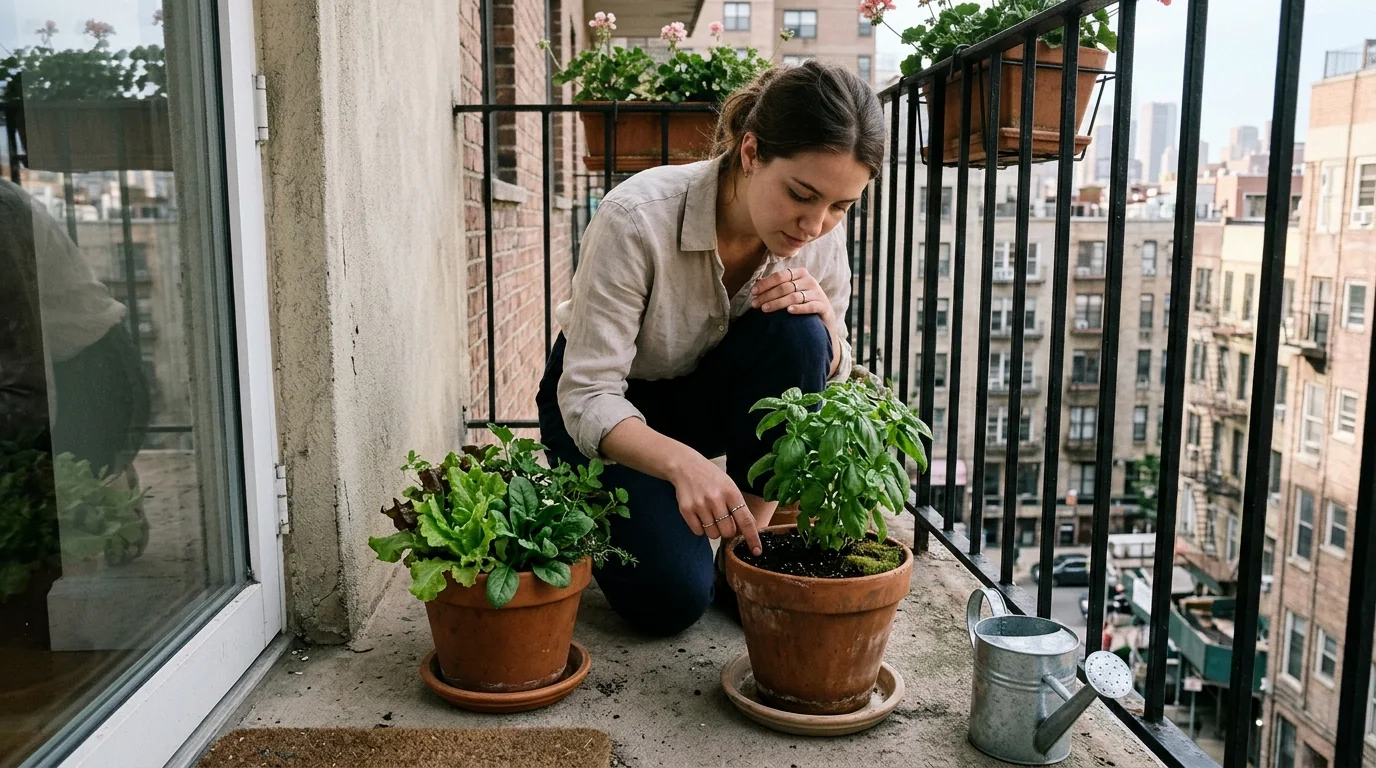
A balcony garden doesn’t have to begin with a row of overflowing pots. One or two plants can help you learn how sunlight, wind, and watering work in your particular space before you invest in more supplies.
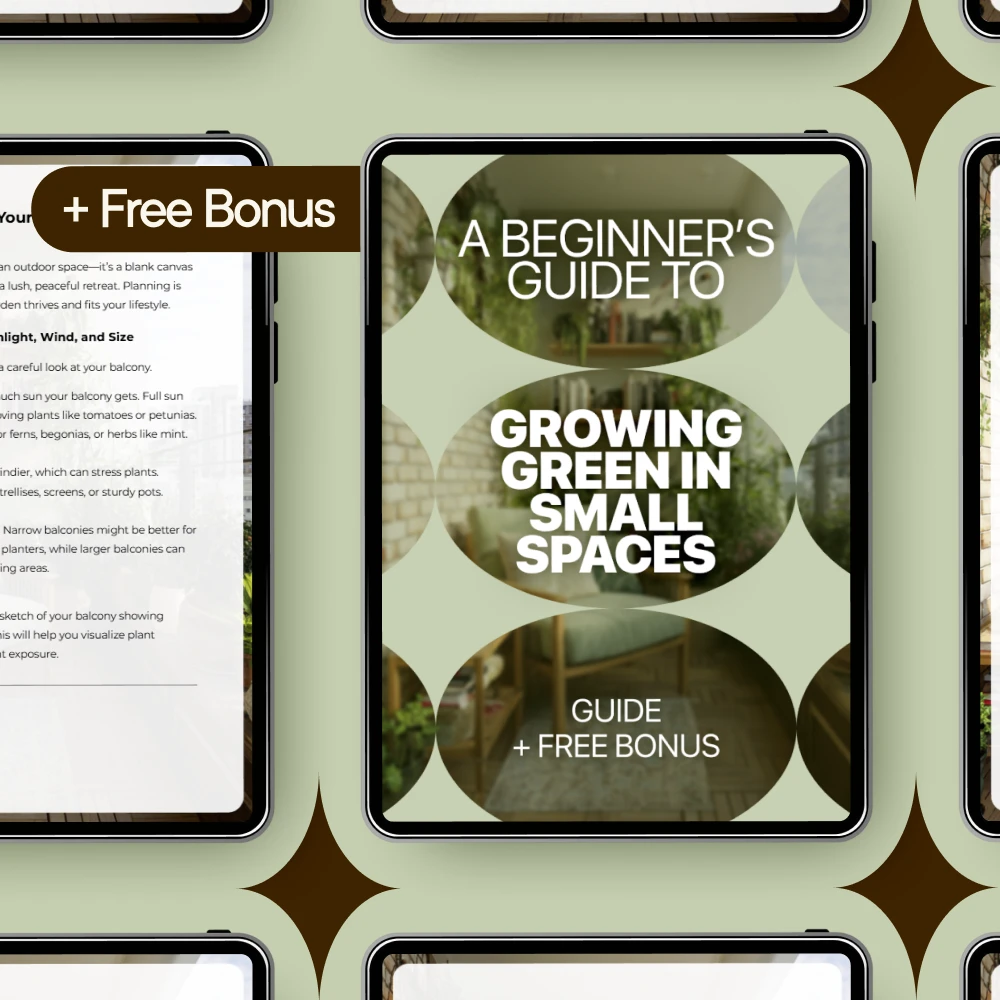
If you’d like step-by-step help along the way, our A Beginner’s Guide to Growing Green in Small Spaces digital ebook is designed for beginners exploring balcony plants and small-space growing. Start with the conditions you have, then build a routine that fits your day.
Start With Your Balcony’s Conditions
Before choosing plants, spend a day noticing where direct sunlight falls. Check in the morning, around midday, and later in the afternoon. A balcony may look bright while receiving only a short period of direct sun, especially if nearby buildings or an overhang cast shade.
Notice the wind, too. An exposed balcony can dry out pots quickly and push over tall plants. A sheltered corner may be a better starting point, as long as it receives suitable light. Avoid placing anything where it could fall over the railing.
Check your building’s rules and balcony weight limits before adding containers. Wet potting mix, water, and ceramic pots can be heavier than they look. Rules may also cover railing planters, drainage, or items visible from outside. When in doubt about the allowable load, ask your building management.
We recommend starting with one or two plants. You’ll have room to move around, observe what works, and make changes without having to care for a crowded garden.
Choose Plants That Fit the Space
Match each plant to your balcony’s light and your local growing conditions. A sunny balcony in a hot climate can call for different choices than a cool, partly shaded one. Consider the season as well: tender plants such as basil need warm conditions, while leafy greens often prefer cooler weather.
These options are worth considering, but none is guaranteed to thrive on every balcony. Read the plant label or local growing guidance for the variety you choose.
| Plant | Light preference | Starting consideration |
|---|---|---|
| Leaf lettuce | Sun to partial shade | Use a container with drainage and harvest leaves as they grow. |
| Basil | Full sun | Protect from cold and check soil moisture regularly. |
| Mint | Sun to partial shade | Grow in its own pot to contain spreading roots. |
Think about how you’ll use the plants, too. A pot of herbs near the door may be easy to check and harvest, while a leafy plant in a shadier corner can make use of a spot that receives less direct sun. Leave enough space around each pot for airflow and easy access.
Set Up Containers and Care for Your Plants
Choose containers with drainage holes so excess water can escape, and fill them with potting mix suited to containers. Garden soil can be too dense for pots. Select a container large enough for the plant’s expected root growth, but remember that larger pots hold more wet mix and add more weight.
Place saucers beneath pots where appropriate to protect balcony surfaces and neighbors below. Empty collected water when needed, and follow your building’s drainage rules. Keep pots stable and accessible rather than balancing them on a narrow ledge.
Water by observation
Check the soil regularly instead of watering on a fixed schedule. Feel the mix below the surface and use the plant’s care guidance to decide when it needs water. Hot weather, wind, small pots, and actively growing plants can all change how quickly a container dries.
When you water, do so slowly enough for the mix to absorb it. Drainage helps prevent water from remaining trapped around the roots, but a saucer full of standing water can defeat that benefit.
Watch for changes
Look over leaves and stems during your regular checks. Pests, damaged leaves, or a sudden change in appearance are reasons to take a closer look at the plant’s conditions. Follow plant-specific guidance for feeding; more fertilizer is not automatically better.
For more container-growing basics, the University of Minnesota Extension’s guide to growing vegetables in containers covers topics including pots, growing media, and care.
Keep Your First Garden Manageable
A short routine can make your garden easier to enjoy. Check moisture and leaves regularly, notice whether plants are getting their expected light, and adjust their position when needed. Moving a pot away from strong wind or into a better-lit spot may help, provided the new location is secure and suitable for the plant.
Keep a simple note of what you planted and when you watered. Over time, you may notice that one pot dries faster than another or that a corner gets less sun as the season changes. Add another plant only when the first ones feel manageable.
Our beginner-focused digital ebook offers step-by-step guidance for growing in small spaces. It’s listed at $5.99; visit the product page for current details. If you also enjoy exploring personal style through digital guides, our Style Archetype Mapping Bundle is another option from our collection.
FAQ
Can I grow plants on a shady balcony?
Yes. Assess how much direct light your balcony receives and choose plants suited to those conditions; leafy greens and mint may tolerate partial shade.
How often should I water balcony plants?
Check soil moisture regularly rather than relying on a fixed schedule. Watering needs change with the weather, container size, and type of plant.
Is the guide suitable for someone new to balcony gardening?
Yes. The digital ebook is presented as a beginner-focused, step-by-step guide to balcony plants and growing in small spaces.









Leave a comment