
7 Basic Dog Commands and How to Teach Them
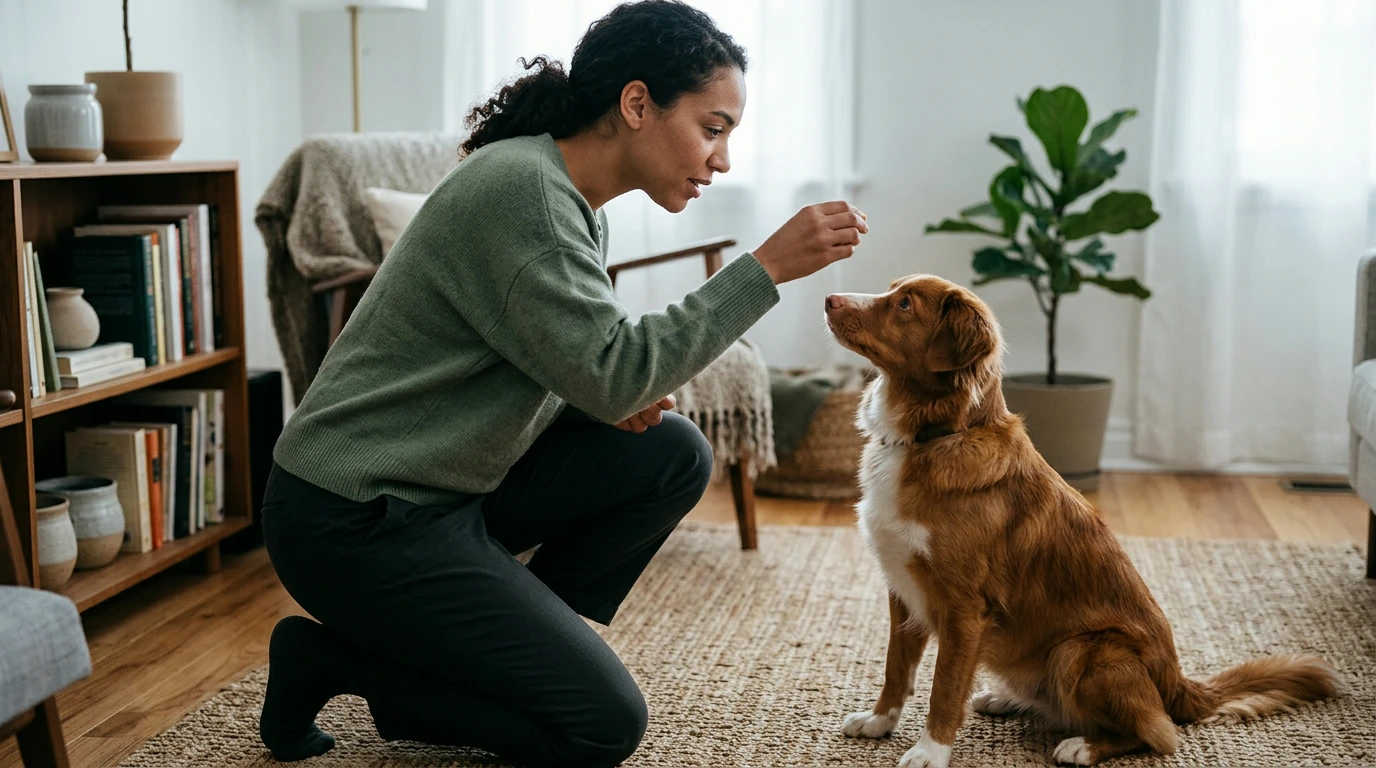
What are the 7 commands that a dog should be able to learn?
Seven useful commands are sit, down, stay, come, heel, off, and leave it. Together, they help you guide your dog through everyday situations, from greeting visitors to walking past distractions. Dogs learn at different speeds, so focus on steady progress rather than expecting perfect responses right away.
For more training guidance, visit our main guide to commands a dog should be able to learn.
How do you teach the seven basic commands?
1. Sit
Hold a small treat near your dog’s nose, then slowly move it upward. When your dog’s bottom touches the floor, say “sit,” reward the behavior, and praise your dog. Practice before meals or while waiting at doors.
2. Down
From a sitting position, guide a treat toward the floor and slightly forward. Reward your dog when their chest and elbows reach the ground, then add the cue “down.” Avoid pushing your dog into position.
3. Stay
Ask your dog to sit or lie down, say “stay,” and pause briefly before rewarding them. Gradually add time and distance. Use a release word such as “okay” so your dog knows when the exercise is finished.
4. Come
Start in a quiet, enclosed area. Say “come” in a cheerful voice, move a step away, and reward your dog generously when they reach you. Practice with a long training line outdoors until their recall is reliable, and follow local leash rules.
5. Heel
Choose the side where you want your dog to walk. Say “heel,” take a few steps, and reward your dog for staying beside you with a loose leash. Build up to longer stretches as your dog becomes comfortable.
6. Off
Use “off” to ask your dog to move away from a person or surface. Lure them down if needed, then reward them when all four paws are on the floor. Offer an alternative, such as sitting for attention.
7. Leave it
Present a treat in a closed hand and say “leave it.” When your dog stops investigating, reward them with a different treat. Gradually practice around more tempting objects while keeping unsafe items out of reach.
What supplies make training easier?
Our team recommends small, soft treats for frequent rewards, a comfortable harness or collar, and a secure leash. A treat pouch can keep rewards handy, while a long line gives you controlled space for recall practice. Keep sessions short and positive, and take a break if your dog becomes frustrated.
FAQ
How long should a dog training session last?
Start with sessions of about three to five minutes, adjusting for your dog’s attention and comfort. Several short sessions throughout the day can be more productive than one long session.








Leave a comment