Baby-Led Weaning Basics for Confident First Foods
First foods can feel like a big milestone, especially when you are deciding what to serve and how to serve it. Baby-led weaning offers one way to help your baby participate in meals, explore new textures, and practice feeding themselves.
Our Tiny Bites, Big Wins ebook is a starting point for parents who want to learn the basics without feeling they have to get every bite perfect. Babies develop at their own pace, and your family can choose a feeding approach that works for you.
A gentler start to first foods
Baby-led weaning is an approach to introducing complementary foods that gives babies opportunities to pick up appropriately prepared food and bring it to their mouths. Instead of focusing only on how much your baby eats, you can make room for practicing skills such as grasping, tasting, and chewing.
It does not have to be an all-or-nothing decision. You might offer a soft piece of food for your baby to explore at one meal and use a spoon at another. You can also offer a preloaded spoon for your baby to hold. Follow your baby’s cues, and avoid pressuring them to take another bite.
Our Tiny Bites, Big Wins baby-led weaning ebook is designed as a starting point for parents looking for baby-led weaning basics.
Is your baby ready to begin?
Complementary foods generally begin around 6 months, when your baby shows developmental signs of readiness. Look for the ability to sit with support, control their head and neck, and bring food to their mouth. Interest in food can be encouraging, but it is not the only sign to consider.
If you have questions about your baby’s development, feeding skills, or when to start, talk with your pediatrician. The CDC’s guide to introducing solid foods also offers a helpful overview of readiness and early feeding.
Build a safer first-food routine
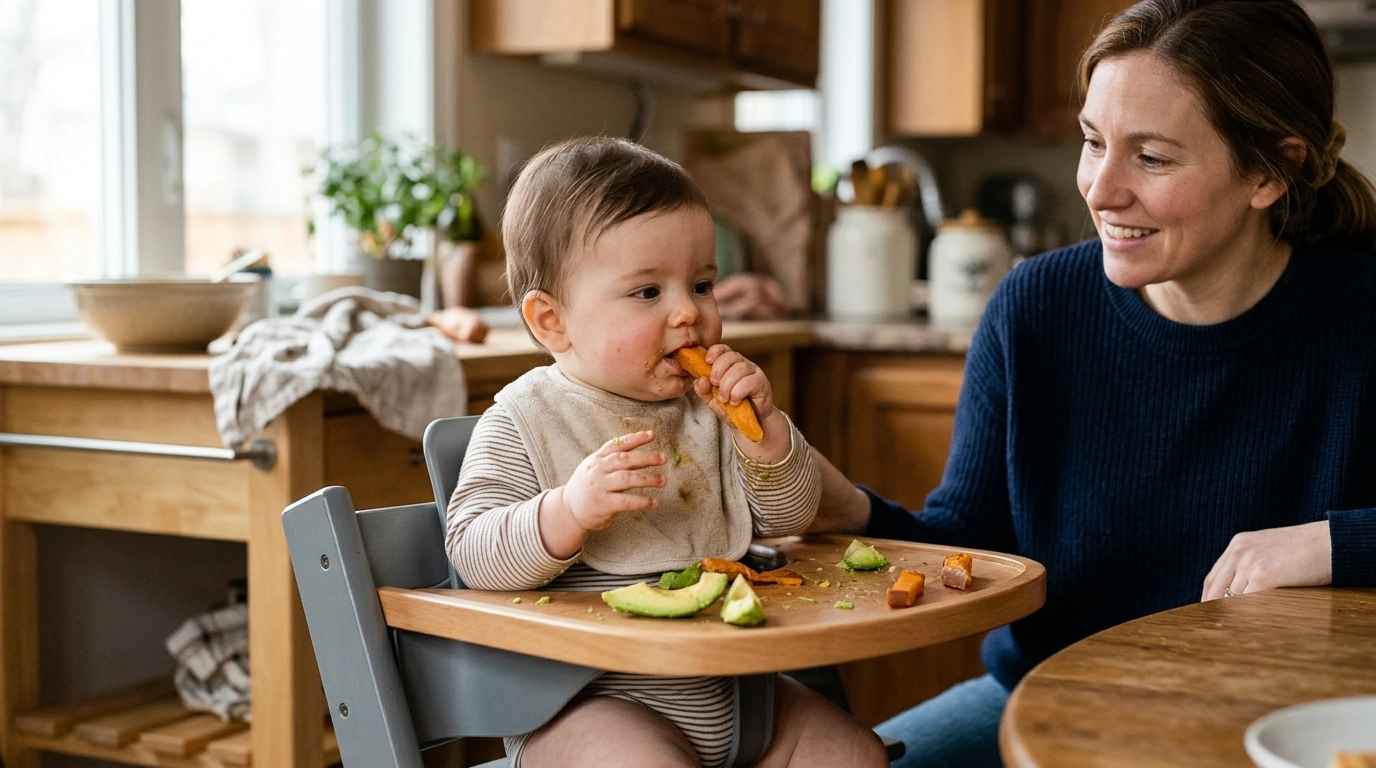
Before offering food, seat your baby upright in a supportive high chair and stay close and attentive throughout the meal. Avoid offering food while your baby is reclined, crawling, riding in a car, or otherwise moving around.
Choose foods that are soft enough to mash easily and prepare them in shapes and sizes appropriate for your baby’s development. For example, a soft strip of ripe avocado or well-cooked sweet potato can give your baby something to grasp. As their skills change, you can adjust how you prepare and offer foods.
Avoid common choking hazards such as whole grapes, whole nuts, and hard chunks of raw vegetables or fruit. The CDC’s choking hazards guide provides more examples and preparation tips. Learning infant choking first aid can also help you feel better prepared.
Introduce common allergens one at a time in safe forms so you can watch for a reaction. For example, peanut butter should be thinned and mixed into a suitable food rather than offered as a thick spoonful. If your baby has severe eczema, an egg allergy, or another concern, seek medical advice before introducing allergens.
First-food planning at a glance
| Focus | Practical starting point |
|---|---|
| Readiness | Look for developmental signs around 6 months |
| Food texture | Choose soft foods prepared for safe self-feeding |
| Iron | Offer iron-rich foods as part of a varied diet |
| Mealtime | Keep baby upright and supervise closely |
Make room for exploration
Early meals are about more than eating a full portion. Your baby may squeeze a piece of food, drop it, lick it, or decide not to taste it at all. That exploration is part of getting familiar with food, so try to keep the atmosphere relaxed and let your baby decide when they have had enough.
Breast milk or formula remains an important source of nutrition during the first year. Complementary foods gradually add variety and nutrients rather than immediately replacing milk feeds. If you are unsure how feeding is progressing, ask your pediatrician for guidance tailored to your baby.
Over time, offer a variety of foods, including iron-rich choices such as well-cooked meat, beans, lentils, or iron-fortified infant cereal. Prepare each food in a texture and form your baby can manage. You do not need a complicated menu: a soft food at a calm family meal is a practical place to begin.
Keep the basics close at hand
Our team offers Tiny Bites, Big Wins as a baby-led weaning starting point for new parents. The ebook is listed at $12.99; visit the product page linked above for current details. A guide can complement your pediatrician’s advice, but it cannot replace individualized care.
If your family is also planning a trip, our travel deals with AI ebook is a separate resource for exploring travel-planning tools. For meals away from home, remember to plan for an upright seat, close supervision, and foods prepared to suit your baby’s skills.
FAQ
When can babies start baby-led weaning?
Babies generally start complementary foods around 6 months, once they show developmental readiness signs. Ask your pediatrician if you have concerns about your baby’s readiness.
Can baby-led weaning include spoon-feeding?
Yes. You can combine self-feeding and spoon-feeding while following your baby’s cues and offering safely prepared foods.
How can parents reduce choking risks at meals?
Seat your baby upright, supervise closely, and prepare foods in forms appropriate for their development. Avoid common choking hazards such as whole grapes, whole nuts, and hard chunks.








Leave a comment